Sunday, October 9, 2011

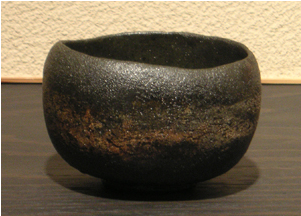
Japanese tea pots


The porous texture, dark color, and organic form of the piece allows it to be perceived as a rock. Mass  is also a component of this piece that makes it resemble a rock because of  the color (or shadow?) at the bottom making it seem heavy.


I attempted to research more about "Muso", the idea that there is no such a thing as acceptance or rejection, which lead me to find about the poet and garden designer Musō Soseki who influenced much to the japanese gardening culture. Surely as a poet he was a deep thinker, and as a garden designer he observed aesthetics. Both qualities of his must have lead to his idea of acceptance and rejection. 

source: http://www.jgarden.org/biographies.asp?ID=21

Tuesday, September 27, 2011

Coil Ceramics

I must admit that, after watching the videos over African and Native American pottery techniques, our style of making coil pots is much friendlier for beginning students :) The native american style is really interesting because everything is made out of scratch, I'd love to try that some day. The lady making the coils was so fascinating because it's like she knows just the right amount of clay and just how much and how long she will roll it with her hands to make the right length. The polishing with the rock was amazing and the kiln was really neat too. The african way was so interesting because the clay is porous yet the technique was so fast. It got my attention how they start from the lip to the bottom.

As for my aesthetic, I'm really drawn to the thin and curvy vessels. Painted decorations and texture (actual or implied) is also really cool.


Chinese pottery seems to share a common style of shape and composition of images, and they're usually glossy and ceramic. The blue and white color selections seem to be popular in traditional chinese pottery.